
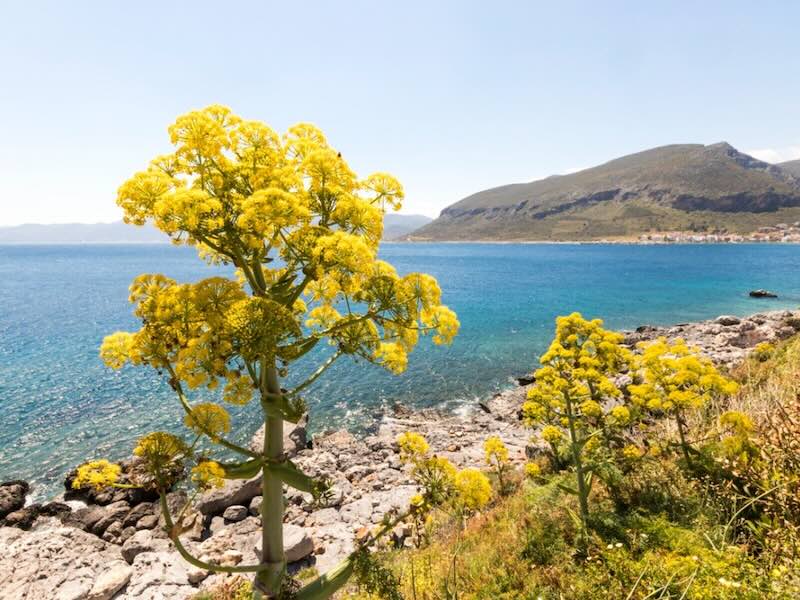
What explains how a plant — one celebrated by every major civilization in the ancient Mediterranean, documented by the greatest physicians and naturalists of the classical world, minted onto coins and carved into temple walls — was allowed to vanish from the earth entirely? Within a century of Rome absorbing the one city whose entire identity was built around it. Within the same historical window that saw decentralized healing knowledge consolidated under centralized imperial authority.
The standard explanation — overgrazing, agricultural mismanagement, the careless exhaustion of a finite resource — collapses when you examine what the record actually shows. A civilization that moved species across continents. That preserved botanical specimens of far lesser value. That had every motivation, and every technical capability, to cultivate the most medically significant plant in the known world.
And didn’t.
As I investigated the deeper record — from the Cyrenian monopoly to the Roman absorption to the fragmentation of the alchemical knowledge streams — a pattern emerged that I could not dismiss. Silphium. Soma. Theriac. Kyphi. The same template, repeating across civilizations and centuries. Not the loss of the plants. The targeted erasure of the how. The preparation methods. The compound formulations. The clinical specifics. The name survived. The reverence survived. The utility was removed.
Because here’s what the disappearance of Silphium also did. It didn’t just end one plant’s story. It may have closed an entire system — decentralized, accessible, not dependent on any central authority for its production or its knowledge base. What replaced it was a medical world organized around scarcity, credentialing, and control. Not destroyed outright. Not denied. Just made inaccessible. And the generations that might have asked the right questions were handed a different story entirely.
This investigation asks whether Silphium went extinct — or whether it was erased.







https://greekreporter.com/2025/08/21/plant-ancient-greece-rediscovered/
💝🥰
I was guided to this a moment ago
muchLove and Gratitude
BeV