
By Laura Aboli on Telegram
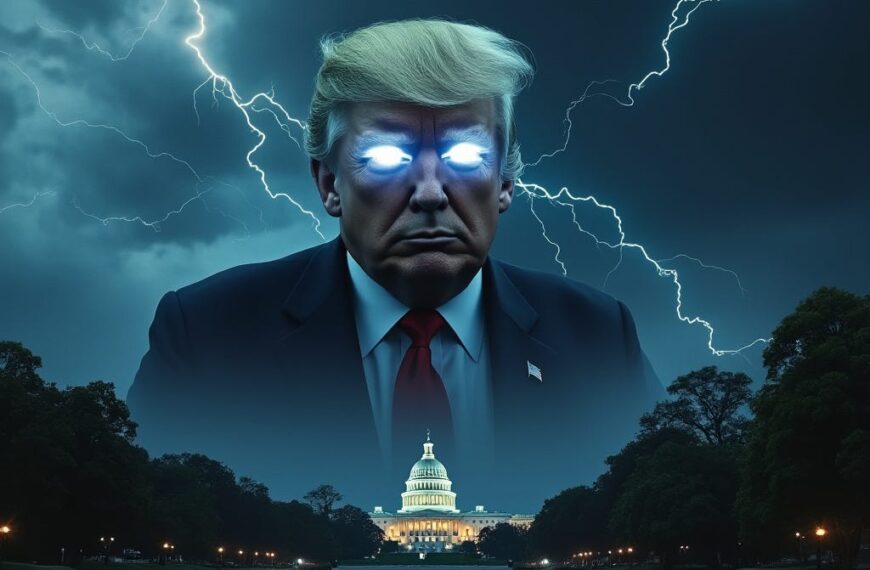
The White House just posted this image and for those who’ve been paying attention over the last few years, it’s immediately recognisable as a direct echo of something that was ridiculed, misrepresented, suppressed, and relentlessly attacked by the media: Q.
Whatever you think of Q, whether you dismiss it, follow it, or are still unsure, it’s undeniable that it achieved what no media outlet ever dared: it got millions of people to start thinking critically, researching independently, and questioning official narratives en masse. It didn’t demand belief, it provoked curiosity and seeded inquiry.
Q first appeared in late October 2017, posting anonymously on 4chan under the moniker Q Clearance Patriot, later migrating to 8chan/8kun. The poster claimed to have Q-level security clearance, hinting at high-level military intelligence working to expose entrenched corruption within the U.S. government and beyond. It soon became clear this wasn’t a lone internet larp, it was methodical, cryptic, and strangely prescient.
As of its last major active phase, over 4,953 posts (called “drops”) were made, forming what many consider a digital breadcrumb trail to awaken the public.
Q’s last known post was in December 2020, though a few sporadic messages appeared again in mid-2022, sparking debate on whether the operation had resumed.
Contrary to mainstream portrayals, the Q movement is not a monolith. It became a decentralized information army, a worldwide digital awakening. Researchers, often called “anons,” would decode and analyze drops in real time, cross-referencing them with real-world events.
What Made It So Effective?
• It never told people what to think—it asked questions to make them think for themselves.
• It used military-style psychological operations, dropping intel in non-linear ways.
• It hijacked the curiosity of a generation raised on puzzles and memes.
• It exposed the illusion of media consensus and the puppet strings of global power.
From day one, the corporate press branded Q as a “dangerous conspiracy theory.” A dangerous ‘cult’. But why?
Because Q’s central thesis was this: That there exists a transnational cabal of criminal elites embedded in governments, media, Big Tech, and intelligence agencies—one that engages in blackmail, trafficking, and ritual abuse—and that elements of the U.S. military were planning to expose and dismantle it.
What sounded crazy in 2017 no longer feels insane in 2025, does it?
What Q did, unlike anything else, was flip the information war on its head. It seeded breadcrumbs that millions of people followed—not out of blind faith, but out of instinct, curiosity, a gnawing sense that something about the world they’d been shown didn’t add up. And for the first time, people weren’t waiting for the media to tell them what was true. They were investigating for themselves.
And yes, some of what Q posted was cryptic, some was wrong, and some probably intentional disinfo to throw off hostile players. But what can’t be denied is how much of it has turned out to be true, years before the mainstream caught up. Epstein. Biolabs in Ukraine. The CIA’s hand in cultural programming. The deep state’s war on Trump. The media’s role as cover. And again and again, the phrase: “Hunters become the hunted.”
And now here we are in 2025. The same press that told you Q was a cult is now quietly admitting the Biden family is corrupt. The same agencies that called Q a threat are now being exposed as politically weaponised. And the man they hunted is turning the phrase around, and preparing, publicly, to hunt back.