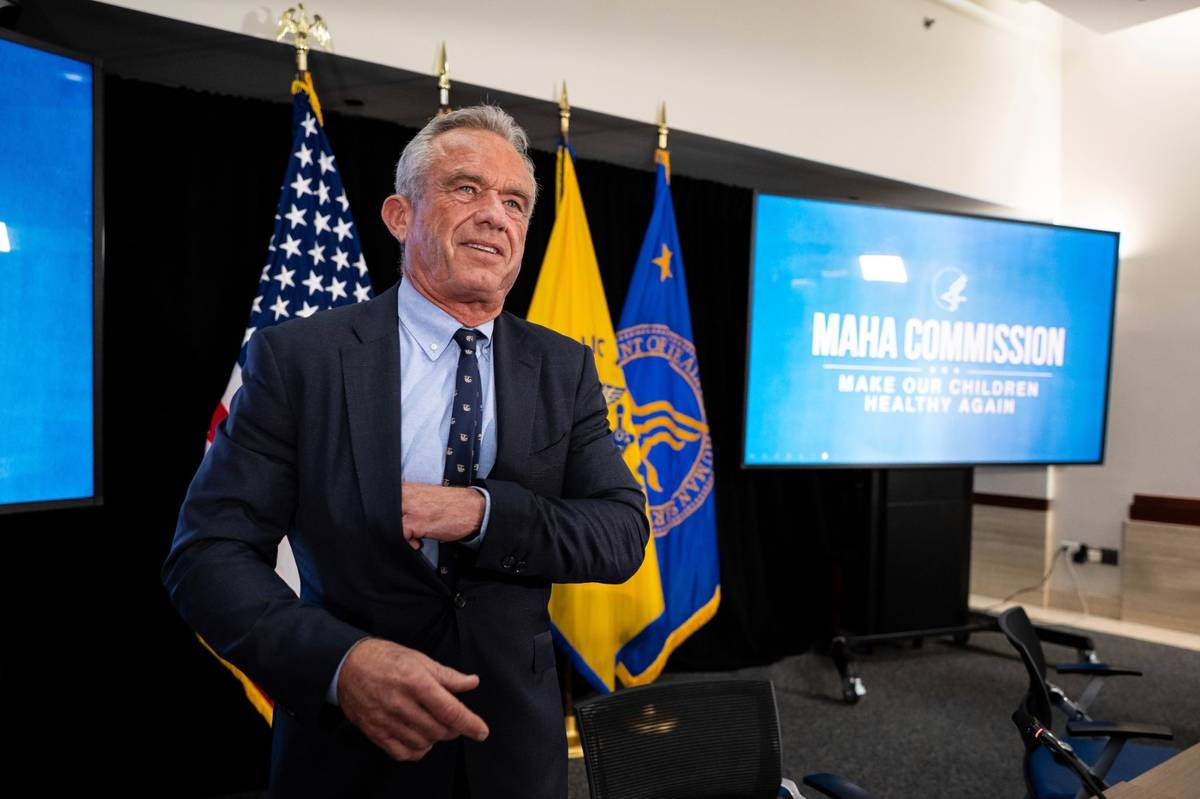
The MAHA Report looks back on the First Two Years of MAHA: real Wins on School Meals, Food Dyes, Drug Prices and the Childhood Vaccine Schedule, even amid Resistance in Washington.
The Extraordinary First Two Years of MAHA
By Margaret Menge of The MAHA Report on November 14, 2026
On Joe Rogan’s podcast last week, Calley Means said that the move to have psychedelic drugs studied and legalized to treat post traumatic stress disorder and other issues almost didn’t happen.
“That was being totally blocked,” Means told Rogan. “Full directive from the top that we were going to slow that down and not do it.”
It was Rogan’s personal call to President Trump, Means said, that made the difference. The president decided to sign an executive order (EO) on psychedelics. A press conference was quickly arranged in the Oval Office, with the President seated at the Resolute Desk, Joe Rogan behind him. Kennedy stood on one side and several veterans on the other side – including some who have long advocated for the legalization of psychedelics like Ibogaine for treating PTSD and depression among veterans.
The EO, signed by the president that day – April 26, 2026 – expedited the FDA’s review of the substances and required the FDA and the Department of Veterans Affairs to share information about their usefulness.
“It’s somewhat outside of the box,” Trump said at the Oval Office signing.
It certainly was. It was like something lifted from the counterculture of the 1960s, from Ken Kesey and the Band of Merry Pranksters. And yet a Republican president was willing to do it, because an almost famous podcast host had asked him to do it. And because he knew the veterans wanted and needed it, since every year more than 6,000 veterans commit suicide, which averages out to 17 a day, often after spending years seeking mental health treatment and not finding anything that works.
At the press conference on psychedelics, Trump called attention to a previous executive order, signed in May of 2025, on most favored nation status for drug pricing, an aggressive move to correct the “egregious imbalance” achieved through what he called a “purposeful scheme” whereby drug companies deeply discount their drugs for access to foreign markets, and hike drug prices for Americans to pay for it. It had been going on for years, and Americans knew it. The website HHS set up, Trump RX , created an online market where American consumers can get prescription drugs at often lower prices than their local pharmacy.
In his extraordinary two-hour appearance on The Joe Rogan Experience, Means, his voice sometimes wavering, described in detail how White House Chief of Staff Susie Wiles and her three deputies blocked many of the most important MAHA initiatives, while enriching themselves on the side from relationships with food, agriculture and pharmaceutical companies. “The system of D.C. does not want any change to happen,” Means told Rogan.
He described how some people in the White House fought changes to the National School Lunch Program, to make school meals more nutritious, saying “the juice isn’t worth the squeeze.”
Yet Trump and Kennedy pushed their new approach through, launching a Harvest to Hallways program, along with Agriculture Secretary Brooke Rollins. The program includes sweeping changes to connect schools to local farms, with $25 million in grants to schools that use locally produced food in school lunches and $70 million in grants to schools to install stoves and ovens so meals can be made from scratch onsite, rather than trucked in.
The system didn’t want it. But they managed to do it anyway.
The move to get hospitals to serve patients better food was similar. It wasn’t driven by polls or the sugar lobby — despite its close ties to Wiles and her deputy James Blair, both of whom were not consulted.
Similarly, the Make Hospital Food Healthier Pledge was launched in July, when HHS Secretary Robert F. Kennedy Jr. and Centers for Medicare & Medicaid Services Administrator Mehmet Oz announced that hospitals should be “a place of healing” and, for this reason, they were going to push hospitals to commit to serving patients healthy food. More than 200 hospitals have already joined the effort – committing to putting good nutrition at the center of patient care.
The changes to the SNAP program also overrode the resistance of longtime political staffers who didn’t want to upset Big Food, which reaps enormous profits from SNAP sales of soda, candy and junk food, the very things Kennedy and team wanted to ban. Since Kennedy took over as secretary of HHS, 18 states have been granted waivers allowing them to prohibit the purchase of soda and candy using SNAP, or food stamps – with some states going further and also prohibiting purchase of prepared desserts and other items.
Also on food, Kennedy and HHS have achieved what few would have thought possible just a few years ago – flipping the food pyramid and getting some of the largest American food corporations to voluntarily stop using petroleum-based dyes to color their food, and switch over to natural dyes. For the Mars candy company, maker of M&Ms, the changeover is costing millions of dollars. But the company has promised to do it, saying all M&Ms will be made using natural coloring by 2028.
Food company giant Pepsico also promised to get all artificial dyes out of Cheetos and Gatorade.
But other huge changes have not gotten as much notice, including scaling back the childhood vaccine schedule.
For a more complete list of MAHA wins, please see the MAHA Action wins tracker.
Source: https://www.themahareport.com/p/the-extraordinary-first-two-years